Tuesday, January 11, 2005

The iPod Shuffle

Apple, apart from the $500 Mac Mini, announced the iPod shuffle today. The iPod shuffle is a Flash-based iPod in 512MB and 1 GB models, slimmer than a pack of gum, looks cool and costs $99 for the 512MB version, and $149 for the 1GB version. Details at the Apple iPod Store, which is the first URL I've seen that has a telephone number in the URL string (1-800-MY-APPLE)

iPod shuffle

It uses a 12-hour rechargeable battery, has much the same controls as the regular iPod and per the name, has both in order, and shuffle playing. Nothing remarkably new, but Apple is adept at making the commonplace cool. Best of all, it comes with a USB connector, rather than the more arcane Firewire, for non-Mac-o-philes. Accesories include a USB Power Adapter, an AAA-powered battery pack and a dock for syncing/charging via the Mac/PC. Both models weigh .78 ounces and are .33 inches in thickness, or as Apple puts it, ".33 inch thin". There is a lanyard on the side, with a sport case optional extra for protection.

Best of all, like other Flash-based players, it promises skip-free playback, unlike the chance of skipping with a hard-drive based model. It has no display, which is unusual, and may be a pain to deal with. All playlist selection, filling, etc. is done via iTunes on your Mac/PC. A slider at the back of the iPod shuffle allows you to mix up the songs in a random order. iTunes 4.7.1 provides an Autofill mode to fill up your shuffle. Autofill your iPod shuffle for a random mix If all this shuffling around is not enough, you can roll your own playlists and sync them, and then do the shufflestep. (ouch!)


Rapid sales may see this model suffer the fate of backordering a la the iPod Mini, but Apple may have learnt from it's experiences and forecasted demand better. I don't think I'll wait too long for mine.

Side note: Apple is possibly making a branding mistake by not capitalizing the word 'shuffle' in it's marketing for the new product - 'iPod shuffle ' is a mouthful, and contracting it to 'shuffle', lowercase, seems poor copy, textwise. Thus, one could say "I shuffle my shuffle every day". Apple seems to have chosen/neglected to capitalize 'shuffle' - thus we are all messing around with their brand identity every time we write 'iPod Shuffle', as I see most people doing on the web - that's dumb of Apple,IMHO, who could have 'owned' the word if they had capitalized it - We talk of Windows, not windows, unless we mean windows and doors.

Technorati is shuffling the meme, as is Instapundit. Heated Slashdot discussion underway


Songs Of Innocence And Experience

William Bolcom(1938- ), American composer set the entire cycle of William Blake's "Songs Of Innocence And OF Experience" to music, in a choral form, in the 1970s. 2004 marked the twentieth anniversary of this opus, and a masterful edition was released last year, featuring the University Of Michigan orchestra and choirs, besides guest singers. Mr Bolsom has taught at the University since 1973, and the work saw it's United States premiere in 1984 at Ann Arbor.

The poems express the Blake world-vision of contraries - "Without Contraries is no progression. Attraction and Repulsion, Reason and Energy, Love and Hate, are necessary to Human existence." This also describes the musical work by Mr Bolsom. In the liner notes, he says,
"The apparent disharmony of each clash and juxtaposition eventually produces a deeper and more unusual harmony, once the whole cycle is absorbed. All I did was to use the same stylistic point of departure as Blake in my musical settings.
...
My fascination with the synthesis of the most unlikely stylistic elements dates from my knowledge and application of Blake's principle of contraries, and I have spent most of my artistic life in pursuit of this higher synthesis. In this work, through my settings, I have tried my best to make everything clear; I have used music in the same way Blake used line and colour, in order to illuminate the poems."


William Blake's poetry might seem archaic, racist and highflown in today's world, but he depicted an era of rapid and violent social change, not unlike our own. The challenges of the industrial revolution, it's effects on society, spiritual understanding in the Age of Machines, and the beauty of human life are all expounded in elegant poems.

My personal favorite as a child, done often in school competitions was the classic "The Tyger", as it is spelled herein.

Tyger! Tyger! burning bright,
In the forests of the night,
What immortal hand or eye
Could frame thy fearful symmetry?


With experience, not enough, one has come to appreciate pieces like "London", "The Human Abstract" and "A Divine Image", done excellently on this CD, in a modern note.

Cruelty has a Human Heart,
And Jealousy a Human Face;
Terror the Human Form Divine,
And Secrecy the Human Dress.

The Human Dress is forged Iron,
The Human Form a fiery Forge,
The Human Face a Furnance seal'd,
The Human Heart a Hungry Gorge


Musically, the compositions range from using sopranos like Christine Brewer and Measha Brueggergosman to baritones like Nmon Ford. Tommy Morgan appears with his lucid harmonica playing, and Leonard Slatkin conducts with delicacy at times, gusto and verve at others. The CD is on the Naxos label.


Monday, January 10, 2005

Why "24" does not work any more for me

I have been a fan of the television series "24" for some time now. I looked forward to the new season avidly. I feel disappointed in the predictability of the plot.

Some excellent commentary is underway at blogcritics.

A couple of comments I posted there:

Comment 5 posted by Aaman on January 10, 2005 09:57 AM:
Flaws in the opener:

1. Terrible, terrible security for the SecDef - no trackers on his person, no cordoning off of area

2. Jack Bauer fails to tell Andrew (the hacker) how he looks like, although he asks him what he looks like.

3. Given the bloodthirsty nature of the terrorists, it is surprising they would let the teenage girl who followed the kid to the compound, leave. At the very least, they would have taken her in, more typically, they would have killed her in a real-life situation.


Now, for what's really wrong with this whole deal - I understand that it is de rigeur to set a stereotypical Arab-looking gang as the villains, similar perhaps to the Dutch being depicted as pillaging marauders in England in 1670, and vice-versa, but is that the best they can do? If I want terror, I can just read the newspapers, or Spiderman, come to think of it.

And after last night's episode, every teen girl who's got a crush on that hot Middle Eastern dude in her class, and is ignored by him, is gonna be following him around, and running to the cops when he says he's got to do 'some work for his father'.

Comment 6 posted by mike hollihan on January 10, 2005 02:48 PM:

Remember, this is the show that detonated a nuclear bomb in the deserts east of LA. So, "realism" is a relative concept here.

I thought it some stunning daring on the part of "24" to have that webcast of the terrorists dressed and posed like so many of the execution videos we've seen in real life, with the flag backdrop and the SecDef tied up in front. I'm sure we'll be seeing that image with Rumsfeld's face photoshopped on popping up around the web real soon.

As for Aaman's third point, it gets addressed tonight. And how.

I agree "24" started slow in hour one, but by the end of that first hour, I was rivetted, thinking "And we're off."

Comment 7 posted by Aaman on January 10, 2005 04:28 PM:

Is kidnapping the most popular mode of protest? Every season has had at least one.

Comment 8 posted by Temple Stark on January 10, 2005 05:26 PM:

Aaman - well, I'd say kidnapping is a good move for this program - it allows that split screen, different scene effect. Ad differnet scenes there as the victims get dragged aroud.

And those rescue / escapes are dramatic.

But, yeah, good point.

I had a sick feeling with the masked goon squad as well.

Comment 9 posted by Aaman on January 10, 2005 11:30 PM:

Tonight's(Monday) episode was further proof of why sequels never work when the plot device is exposed. It is so evident the writers are trying to set up enough plot devices to keep the action going.
-BEGIN RANT-
Utter predictability has ruined the show for me. The banality of the office politics makes one hope things are not really that bad in OpCenter or CTU or what have you. The need to keep the dramatic action focused, while at the same time sustained means continuous stretching and over-complication of minor events.

Kiefer Sutherland is the only reason this show is still worth watching. His immersive depiction of Jack Bauer is well depicted, which is more than one can say for the half-baked, stereotypical villains. The token Muslim moderate is thrown in for good measure, but it does not really make it any more realistic.

This is one of the first times my DVR has been used to speedshift through pieces of the actual show, besides the ads. Although there were a couple of nice ads - like the one for Pepsi.

If tense moments happened every hour on the hour, it would be real easy to snooze for the rest of the time, as one is likely to do if the plot does not rise above it's current level.
-END RANT-

Firefox workaround from MSDN

Browsing the web, one found an unusual recommendation over at MSDN, Microsoft's support site.

It recommends using Firefox, in a quite funny way:
FDBK10939#1: Install Firefox

Workaround Description:
Install Firefox

Workaround Steps:
* Install Firefox
* Install user agent spoofer from the updates site like SpoofX or similar.
* Set your useragent spoofer to fake that you are using IE when visiting MS websites.
* Poof, the problem magicly dispears and the menus work.


Hmmm - good I'm using Firefox, no problem - poof - 16 million plus downloads so far.

In short, the bug is about how a feature works correctly only in IE and not other browsers.

Update: The original bug details are here

Opened by Tommis on 2004-07-04 at 04:42:01

The asp:Menu control only seems to work in IE. I tested the menu with Opera 7.51 and Mozilla Firefox 0.71 both of which produced bad results.

With Opera, the submenu pops up above the menu itself and after that it stops working.
The menu now shows the pop-ups and have keyboard accessibility for Gecko browsers (Mozilla, Firefox, Firebird, etc.) and Opera.
....
Edited by Microsoft on 2004-09-03 at 11:10:15

Please stop modifying the repro. The repro field is here to give us a way to reproduce the bug, not a way to publicly express opinions, which can be more efficiently done through forums or blogging.
We got the message about the way some of you feel a menu control should be developed and will take that into account when fixing this bug.
....Resolved as Fixed by Microsoft on 2004-09-24 at 10:15:06

The menu now shows the pop-ups and have keyboard accessibility for Gecko browsers (Mozilla, Firefox, Firebird, etc.) and Opera.


Quite trenchant responses in the message board below the bug.

Get Firefox!

The Best Movies Ever

My all-time list of best films found it's missing member this weekend. I've been keeping a little list, not ranked internally, for the immortals see each other as equals, yet greater than the rest. There are fallen angels too in the list - films have deteriorated on reinterpretation with changing times - a couple of examples follow the list below.

Here goes:

> Hero (Ying xiong) - Zhang Yimou's talents, coupled with visual, ethical and conceptual richness make this film a lasting delight. The transformations experienced by the characters, the country and the viewer are all captured in a cinematic language that speaks volumes of the director's expertise. The essence of what makes China into the country it is, is captured in this film.

> Lagaan - This Indian film takes the game of cricket and couples it with the extortionist land taxes under the British to create an entertaining tale of teamwork, competition and human revolution. The redemption of Judas, the challenges of pusillanimous leadership and the sin of overweening arrogance are handled deftly in this timeless tale.

> The LOTR trilogy - The visual realization of the best books of the twentieth century into panoramic perfection is done with skill for the most part, a cast of thousands, and a potent mix of love, honor and betrayal. The consistency of the trilogy, unusual in films shot across a time span of seven years, enables one to treat the trilogy as a whole, and allows for multiple day-long viewing marathons, each revealing additional layers in the films.

> Interview With The Vampire - One almost does have sympathy for the devil by the time this film is through with the centuries-old tale, in a manner of speaking, of the Vampire Lestat. Modern decadence and moral ambiguity are brought to the fore, with peerless acting by Tom Cruise and Brad Pitt. Kirsten Dunst's Claudia is terrifyingly innocent, yet corrupt at the core, portraying torment in a truly tortured manner.

> Casablanca - This gets better as time goes by, pun unintended. The elegance and simplicity of this film belies its depth and visual artistry. Every scene is carefully detailed and fits into the whole as an element without which all would be naught. Colonialism in Africa, the Nazi menace, love, truth and lies, and of course, Rick's.

> Christ In Concrete - Edward Dmytryk adapted this depression-era neorealist movie from the 1939 novel by Pietro Di Donato. The personal travails of the director, who was blacklisted in the McCarthy-era while making the film underscore it's gritty theme, of an Italian laborer, who strives to possess his own house, while making castles of concrete for others. The real-life betrayal of his colleagues by Dmytryk, who 'named names', perhaps affected the tragic beauty of 'Give Us This Day' as this film is also known.

> High Fidelity - The personal appeal of this film notwithstanding, it is particularly effective as a depiction of modern urban fickle relationships, good music and fear of commitment. The reverse transformation of the book from England to Chicago makes it an interesting example of the similarily of such themes the world over.

> Monkey Business - The Marxist jokes are funny, yet speak to deep insights into 'la condition humaine'. Although set on an ocean liner, the plot, if one can call it that, swings from the decks to a barn, along with non-stop zany humor in their first original comedy, in a timeless manner.

> The Battle Of Algiers - The documentary approach to creative film making sees it's peak in this tale of 1957 street battles in Algiers and their drive for independence. In the maelstrom of characters, tales and conflicts, agitprop is turned into drama, making one yearn for a more peaceful time, if ever there was one.

> The Apu Trilogy - Growing up, and rediscovering that tragedy is what makes you what you are - the films in the trilogy par excellence shift scenes from the village to the city with a sensitive, elegant flair. Satyajit Ray captures what it is to be human, to live, love and die with camerawork that is more adept than many luminaries of cinema, and character development to rival the best. The ability of humans to find happiness even in the depths of poverty and grief are just part of the perfection in these films.

Fallen Angel: A Passage To India

The best film industries: 1. China 2. France 3. USA 4. Japan

The best directors: Wim Wenders, Satyajit Ray, Quentin Tarrantino, Billy Wilder, Akira Kurosawa.


Friday, January 07, 2005

Why Books Need A DVD Version

I was watching the Extreme Unrated Version of "Harold And Kumar Go To White Castle" yesterday and was struck by how well the film, already good in the theatrical release, has improved in the DVD transfer. There are 3 commentaries, a cab-drive interview, deleted scenes and what's probably a first, Harold and Kumar voice-overs on the selection menu which get progressively more irritated if you do not choose an option.

Many a book could have been improved if authors were able to put out a 'DVD version' a few months after the original release of the book, incorporating plot elements that found their way on the editor's cutting room floor, hypotheses, an annotated commentary by the author, and so much more.

Since this is not the norm, we, the readers, are left to speculate on what might have been, and in the case of some ardent fans, create our own annotated versions, sometimes quite innovatively, such as this reader-annotated version of Neal Stephenson's short "In The Beginning Was The Command Line", ref boingboing.

Many books could be retrieved from their mutilated, flawed forms through this process. The finale to the Stephen King "Dark Tower" series was terribly unsatisfying for many readers. It is entertaining to speculate that the author intended a different approach, and then changed his mind. Perhaps his notes would shed light on the matter.

Critics would be able to peruse multiple readings and perspectives of the book, and not merely have to build sandcastles on the shores of the creative sea. At present, second- and third- and unexpurgated editions serve as modes of further communication between the creator and the consumer of the text, as well as critic-annotated editions and separate, additional releases of related texts. A 'DVD version' would obviate this process.

The publishing industry would welcome this approach, for similar to movies, it would represent a new revenue stream. Film-book tie-ins can also be envisaged. Thus, you could get a 30 pound box with deluxe, annotated, 'DVD versions' of the Lord Of the Rings' books, accompanied with the excellent Tolkien back stories of MiddleEarth, and for $70 more, the extended DVD versions of the films as well, with cross-references to the e-books on the DVDs for each scene.

'DVD versions' of books would also be in line with the similar convergence of media and technology in the consumer electronics, computing and entertainment space. Of course, a purist might object and prefer pure-text readings of the works, much like film aficionados yearn for original theatrical DVD releases of the Star Wars films. Authors of the world, unite - you have nothing to lose but your readers!


Thursday, January 06, 2005

The Hungry Tide

"The Hungry Tide", the most recent book by Amitav Ghosh, author of excellent works like "The Calcutta Chromosome" and "In An Antique Land", is eerily well-timed.
‘The river was like a pavement, lying at its feet, while its crest reared high above, dwarfing the tallest trees. It was a tidal wave, sweeping in from the sea; everything in its path disappeared as it came thundering towards them... But now it was as if death had announced its arrival and there was nothing to do but to wait for its arrival...’


The book deals with the indestructibility of the human spirit in the face of adversity. It also takes up the ecological disasters that threaten the last wildernesses on our little jewel drifting through space.

The Sunderbans are a vast delta with forests, swamps, tigers and rich bio-diversity to the south of Calcutta at the mouth of the river Ganga emptying into the Bay of Bengal. The forest is under threat because of denudation and human progress. In the British Raj, Sir Daniel Hamilton attempted to set up a sort of Utopia in the Sunderbans, but failed. Today, it is a beehive of activity, trade, fishermen and villagers, amidst the scenic beauty.

In the book, Piya Roy, an American marine biologist visits the Sunderbans to study the Orcaella, riverine dolphins who frequent the region. She has grown up in Seattle and is unexposed to the challenges of life in the wild, among the under-globalized. Her researches bring her into contact with the book's other major character, Kanai Dutt, an urban, urbane professional, who is visiting his aunt in an island in the Sunderbans to discover the life he left behind.

His uncle, wonsuponatime a Socialist revolutionary, retreated to the villages and became headmaster of a village school. He has left his memoirs to his nephew, and the tale of a life lived through passion, strife and striving. Kanai, searching for his own true identity, is attracted to Piya, and accompanies her on a trip through the Sunderbans, along with their boatman, Fokir, a simple illiterate villager, who is more in tune with nature and life than his boatmates.

The trip is a journey of the mind, the heart and the spirit. The urban sensitivities of the protagonists, who come from a structured, black and white world are confronted with a fluid, everchanging environment, reshaped daily by the 'hungry tides', where tigers kill villagers by the hundreds, but if a tiger is killed by a villager, the government metes out punishment for killing a representative of an endangered species.

The confluence of Western trends and old values is brought out at every turn. Kanai runs a school in New Delhi for accent modification of call center employees. His aunt is rooted in the past, with all the contradictions of the past. Piya sees them all as alien - the people, the land and above all, the language. Like most of Amitav Ghosh's books, language and its mutability are a key theme. The language of science versus the language of the jungle, Bengali versus English. Kanai, himself, is more a 'textual scholar' than businessman. He is enraptured by the richness of the language in the Sunderbans, land of many waves of migrants. "Bengali, English, Arabic, Hindi, Arakanese and who knows what else?" occupy him, sifting through the dialects as if through a sieve, looking for meaning in the confusion.

The challenges arise when language is insufficient to convey meaning, when progress turns full circle, and when the self encounters the other, finding itself.

Amitav Ghosh, one of the best Indian writers writing in English today, just returned from the Andamans, where he was part of a relief team. He spoke of his experiences there.
“As I walk around the refugee camps in Port Blair, I see true tragedy. It’s a lost world out here. The people have nothing, their eyes are yearning, they only have water to drink. I talk to them. I’m shocked by the attitude of the civilians, they’re so confident. ‘We have everything. We don’t need help,’ they tell me. This attitude astonishes me. At relief camps, the water and food is being provided by private organisations. I ask the authorities: How can I help? What can we contribute? ‘Nothing, we have everything,’ is the reply. It only gets tougher as I reach Nicobar. There are areas we can’t even reach. We don’t know how many are trapped in the labyrinth of waterways. Here, even small things become the world in microcosm. I know Nicobar is very badly affected, yet we don’t know the extent of the damage. There are dozens of smaller islands, there’s no connectivity with them. But what is really worrying is the acceleration of seismic activity in the Andamans. I hear unconfirmed reports of eruptions in Diglipur in the north Andamans. The administration doesn’t have the machinery to warn people of a disaster, nor does it seem to be bothered. In all this sadness, the military is the only hope. I was impressed with the district collector of Nagapattinum; she is welcoming all the help she can get. That’s the attitude we need to adopt."


Tuesday, January 04, 2005

Webcams made easy

Via boingboing, a nifty technique to view various unsecured webcams from googling them, illustrating further the lack of distinction between the public and private spheres in the networked world:

The syntax to be used is:inurl:"ViewerFrame?Mode=" as the search string - the URL search string for easy use.

Various modifications are possible, as I shall post herein shortly.
Updates at boingboing - Some pretty cool stuff

For some reason, many seem to be in Japan, although I did find a few in Canada and the US. My current favorites:

A laundromat in Japan(?)
laundry

A house in southeast asia/china - cute pets.
pets


Globalization and Marginalia

In response to a post in blogcritics on a couple of items that are sublime and ridiculous, a variety of comments were adduced. Somewhere along the way, I made the point that
Is globalization a crunching of global marginalization? What, then, of marginalia - that essential element of criticism?

Another blogcritic, Sandra, asked,
do you mean global marginalization is the same as marginalization and the term global needn't be there?. What about marginalia? Clearly, I am still confused:)

To clarify, I explained,
Global marginalization is not the same as marginalization, although the marginalized might disagree. Global marginalization, IMHO, refers to the overriding of local cultures with other dominant cultures. It would be facile to consider this as referring to Americanization, but Americanization is only the latest of the many waves of globalization. Possibly one of the most effective was the Muslim expansion of the medieaval ages - the effects are still evident in as far flung places as Spain, Indonesia and Africa. In fact, I recommend V S Naipaul's books "Among the Believers" and "Beyond Belief" as excellent demonstrations of global marginalization. Americanization does much the same with it's emphasis on a homogenous response to social situations.
Case in point: South Indian communities who practise Arab (desert) customs in conjuction with their own local customs, rituals and so on, are strong participants and identify with the Islamic movement, yet are marginalized within the movement itself, mostly because of poor education and lack of self-expression.

Which brings one to marginalia as a form of self-expression. Marginalia, besides being an excellent book of poems by Billy Collins, is the form of annotations on documents, books, medieaval manuscripts and blog posts. Perhaps the marginalized will have to resort to marginalia as a form of self-expression, even in Putin's Russia.


I truly believe that modern globalization must be an inclusive effort, else it will fall the way of all such past efforts, and be relegated to a niche phenomenon that will linger, in various mutated forms, for a long time to come.

Very resilient societies can transform and localize the forces of globalization, and perhaps that is what is needed - a survival of the fittest of global societies, for not all societies are vibrant and capable of standing up global change.


Monday, January 03, 2005

Hope, Healing and Solidarity

From the wires,

President Bush enlisted two former presidents for an ambitious private fund-raising drive for victims of the deadly tsunami on Monday, asking Americans to open their wallets to help the millions left homeless, hungry and injured.

"The devastation in the region defies comprehension," Bush said as he announced the campaign to be led by his father and Bill Clinton. "I ask every American to contribute as they are able to do so."

Bush, his wife, Laura, and his two predecessors paid brief sympathy visits to the embassies of the four nations hit hardest Indonesia, Sri Lanka, India and Thailand. The first lady brought bouquets of white roses, and the president wrote messages in embassy condolence books, offering prayers as well as promises of U.S. aid.

....
Meanwhile, the president was getting daily reports from a delegation he dispatched to the region to assess whether the United States government can do more. Speaking en route to Bangkok, Thailand, Secretary of State Colin Powell, leading the team with the president's brother, Florida Gov. Jeb Bush, did not rule out more U.S. government money. But he said there was no immediate need to increase the $350 million commitment because the most urgent task was coordinating all the aid that was pouring in the vast majority still unspent.


World disasters in the past have meant significant political changes and economic changes, normally in the affected areas. Perhaps with the interconnectedness of the new millenium, the effects are even more far reaching now.

Feedback - Rush Pays Tribute

My very first rock album was "Presto" by Rush, purchased from a little store in Kathmandu, site of many memories (Kathmandu, not the store). I can still remember the powerful visual images the songs engendered in me, especially the title song, with the images of star dust and evening planes rising up over constellations of light. Much of my creative experience since then seems to have been defined by the early experiences with "Presto", "2112" and the live shows.


Rush returned to the studios in 2004 and gave us in "Feedback", not one of their trademark theme rock albums and not an electric funk-rock collection, but rather a brief, 28-minute, 8 song collection of cover versions of classic rock and blues songs from the 1960s and 1970s, when they were young and callow. Songs that they cut theit teeth on are now reframed through their own gifts of musical style and substance. The selection of pieces has been called a political statement by some, but it seems more like a collation of memories and formative experiences.

1. Summertime Blues - The Eddie Cochran classic, one of the 500 greatest songs of all time, as per the Rolling Stone list, is transformed into a breakneck very typical Rush speed scene, with fast bridges, vocals that rise above the wall of sound and hyperfast drums. Other versions of this classic have been by Joan Jett, T Rex, The Who, Van Halen and Olivia Newton-John. A social youth protest song, appealing to any rebel with a cause

2. Heart Full Of Soul - The Yardbirds hearbreaker is redone with a mellow, slow air, by Rush standards, that takes up the theme with strumming chords where the words leave off, communicating the essence of love, regret and need to be loved through a simple arrangement that repeats throughout the song. Very Beatles-like, and quite close to the original.
And if she says to you
She don't love me,
Please give her my message.
Tell her of my plea.
And I know
That if she had me back again,
I would never make her sad.
I've got a heart full of soul.


3. For What It's Worth - The Buffalo Springfield song from Woodstock dealt originally with the Vietnam war, then in the telling became a youthful resistance anthem against cops, the 'Heat' et al. The selection here by Rush might be a comment on the state of things today. Then again, it just might be a favorite song, reinterpreted for the zeitgeist. "Everybody, look what's going down"

4. The Seeker - This was a tribute song in its own right by The Who, invoking "Bobby Dylan, the Beatles, Timothy Leary" to help answer the fundamental questions of life. Surprising vocal range is displayed in this version, with a few brief, abrupt pauses that serve to set off the typical Rush slides into artistic, seamless fretwork.
I'm looking for me
You're looking for you
We're looking in at other
And we don't know what to do


5. Mr Soul - The Neil Young song is done in a voice eerily reminiscent of Neil himself. The theme is the price of fame, and the desire of the artist not to lose his 'soul' in the pursuit of success, a theme that Rush themselves are quite familiar with. Interesting analysis of the original song here. This version ends with a few taps on the steel drums (methinks) that linger for a long while.
In a while will the smile on my face turn to plaster?
Stick around while the clown who is sick does the trick of disaster
For the race of my head and my face is moving much faster
Is it strange I should change? I don't know, why don't you ask her?


6. Seven And Seven Is - This relative unknown, originally by Love, is given the full Rush treatment. Hyperfast guitarwork and a deceptively simple beat by Geddy Lee mark this off as one the band is claiming for their own. The song itself seems to be about growing up and realizing that growing up isn't quite what one expects it to be when one is young.

When I was a boy I thought about the times I'd be a man
I'd sit inside a bottle and pretend that I was in a jam
In my lonely room I'd sit my mind in an ice cream cone
You can throw me if you wanna 'cause I'm a bone and I go


7. Shapes Of Things - Jeff Beck's poem set to music with the Yardbirds, about what lies ahead in life is possibly the weakest song in this Rush album. Although the song itself sounds pretty good, it seems too derivative and strained, expect perhaps at the very end, where Alex Lifeson leaves a few personal touches.

Shapes of things before my eyes
Just teach me to despise
Will time make man more wise
Here within my lonely frame
My eyes just hurt my brain
But will it seem the same

(Come tomorrow), will I be older
(Come tomorrow), maybe a soldier
(Come tomorrow), may I be bolder than today


8. Crossroads - The Eric Clapton/Robert Johnson song is done in almost the same style as the original, with few Rush-specific touches. This revitalizes the classic song, which is still so bathetic in it's tale of asking for one last chance to retrieve the guitarist's soul from the Devil. It almost sends a frisson of fear down one's spine as if it were all for real.

In all, an excellent compilation, not perhaps what some aficionados of the band might have expected after the albums of the 1990s, but a good album to set off against the early blues rock albums, reinvigorating a genre not much heard from nowadays. The liner notes add some detail on the selection of the songs themselves, and the 'back to the roots' theme.


The Devil's Business

One of the best books C S Lewis wrote in his exposition of the war between Good and Evil was "The Screwtape Letters", detailing the correspondence between a senior demon, Screwtape, and his apprentice, Wormwood. The author creates a near-perfect simile of Hell as bureaucracy, temptation as career advancement and vices as virtues.

One was reminded strongly of this book on reading "Sympathy For The Devil" by Holly Lisle. This book is available as a free download from the excellent Baen Free Books Library, which is itself a devilishly wonderful source of good writing from great SF authors.

"Sympathy For The Devil" is a semi-serious story of the efforts of the denizens of Hell, the Christian sort, to exceed their numbers, in a manner of speaking. Hell is depicted as a large, faceless corporation, with department heads responsible for increasing the intake of souls. Corporate infighting is part of the game, such as Agonistis, the head of Lust and Fornication lamenting that fornication is falling ever since the Disease and Pestilence department introduced AIDS, and himself striving to increase condom usage to make up his numbers. In fact, most earthly innovations such as miniskirts, sexual harrassment suits and computer porn are indicated as being straight from Hell, literally. Hell is full of marketing professionals and lawyers. Unfortunately, a good computer tech is hard to come by, even in Hell.

Into this potent mix comes Dayne Kuttner, a naive nurse from North Carolina, brought to tears by the travails of her patients. She prays to God in heaven, and in her anger, makes an earnest appeal for salvation for the denizens of Hell.

"You said ask and believe. So now I'm asking. Let them have the chance to repent, God. All of them. Every single soul in Hell. Let them have the chance to learn from the mistakes they made, let them into Heaven if they repent."

"Until you do this, you can consider me a conscientious objector, protesting the policies of Heaven. When I die, you can send me to Hell, because I won't go Heaven until every soul can find a way there. Every soul. No matter who they were, no matter what they did"


God, who happens to be in the Christian Sector of Heaven at the time, and is the prime practical joker, decides to grant her prayer in his own special way. He dictates that one percent of the population of North Carolina, about 58000 in all, demons and denizens of Hell be loosed on Earth to live and work their Hellish mischief within North Carolina, where "the roads of Charlotte were designed by Hell's minions", under specific earthbound rules. They will also have the chance to repent, should they choose to do so.

The Devil, decides to settle a few personal scores and sends Agonistis, his threatened second in command to lead the Hellspawn hordes. He sets a few conditions of his own, the most important being that Agonistis must earn a profit for Hell in the business and that he must acquire Dayne, the nurse's soul for Hell within 30 days.

The rest of the book is an amusing and exciting set of events that unravel in rapid succession. Deep philosophical questions are handled with verve and light humor. The effects of 58000 demons in the state of North Carolina are brought out effectively and with deathless humor. God appears a few more times, not always as the bearded dude, and it would not be giving too much away to say that for once, deus ex machina is the operative device in the climax.

In Buddhism, a Bodhisattva is one who forgoes his or her own personal salvation to strive for the salvation of all others. Since everything in the universe is interconnected, and every cause has an effect, making a minute revolution within oneself, as Dayne Kuttner does, can change the destiny of the entire cosmos. The author herself, transmuted her own personal strivings into the essence of the book and maintains a blog with a Work In Progress meter for her books.

This book is the first in a trilogy, each as good as the other.


Sunday, January 02, 2005

The End Of Quotas

January 1, 2005 marked the end of textile quotas in the amount of textiles that North American countries and Europe can purchase from a single country, as per World Trade Organization agreements. This frees trade worth about $300 billion and throws open the lucrative Western markets. The complex 40 year old Multifibre Agreement (MFA) capped the textile exports of developing countries to resource rich nations. These were self defeating in their purpose and limited textile growth and competition. The challenges introduced, however, have far reaching implications.

Large textile producers like India and China have the most to gain, while smaller, yet significant producers such as Bangladesh and the Phillipines could see a big hit in their revenues from textile sales. A number of textile workers in these smaller countries have already lost their jobs,

Officially, India is aiming at a target of $50 billion in annual textile exports by 2010, about four times the current figure of $14 billion a year. Commerce minister Kamal Nath expects a 50 per cent growth in exports to the freed US and the European Union markets in the very first year. Textile minister Shankarsinh Vaghela projects India’s apparel exports to double in the next two years.

China has even larger aspirations, thanks to greater economies of scale. While most economic numbers out of the official Chinese apparatus are somewhat questionable, as proved by the Economist in 2003, there is no doubt that for much of the world's retailers, China has become the back end of the global supply chain. Chinese textile sales to the US alone rose 30% in 2004

As far as labor costs go, as a proportion of the total cost, the labor cost in India is only 6%, compared to 10% in China, 19% in Mexico, 22% in Thailand, 29% in Turkey, 51% in South Korea and 69% in Germany. Only Indonesia has a lower labour cost of 5%. India has a capital cost advantage as well. The proportion of capital costs to gross output is 6.7% in India in the textile industry and 7.8% in garment making, while those in China are 12.2% and 12%, respectively.

China excels in the manufactured, mass-produced sector. Design is however, a strong element in India's appeal to Western apparel manufacturers. The Indian National Institutes of Fashion Technology churn out nearly 1000 graduates a year. The US International Trade Commision sees India as a significant alternative to China as a source for textile goods. Large integrated mills have been set up across textile parks in India in preparation for this change over.

India has also, significantly, adopted the product patent regime as of Jan 1, 2005 for food, drugs, chemicals and embedded software, keeping safeguards for the common weal. A 'mailbox' application process has been established for patent recognition.

The US textile industry, fearing a flood of cheap Chinese imports when the quotas expire at the end of this year, has been leading an international effort to persuade the WTO to approve a three-year extension of the quota system.

However, WTO members recognise that extending the quotas would unravel a key portion of the 1994 Uruguay Round world trade agreement, which required countries to make difficult trade concessions in a number of sectors. Many of the agreements are perceived by developing countries to be in favor of developed nations, and the developed nations are loath to give up some of their competitive advantages.

Textile makers also expect to improve on their buying power by having to place orders with fewer countries and manufacturers as opposed to the current covert arrangements split across dozens of manufacturers to avoid the quota restrictions.

The significant shifts in the textile industry will take a few years to play out, although the negative effects will likely have their impact very soon, as is usual in economic dislocations.

Update: The WTO has a paper on the global textile industry post the end of quotas (pdf). An overview of textiles under the WTO is also available.

The agreement itself is part of the Uruguay round agreements.

Glenn Reynolds has some thoughts (and a ref to me - Thanks, Glenn) on the implications.

Spear Shaker has a brief from the frontlines of global outsourcing, via Dhaka, Bangladesh.


Saturday, January 01, 2005

Thirteen Mean Girls

I still cannot believe that I just watched "Mean Girls" and enjoyed it. It was perhaps elitist to have had low expectations before viewing the film, but one is too wary of packaged presentations from Hollywood touting the wares of the fickle god of consumerism.

"Mean Girls" was no such film. It conveys a number of positive messages without being trite, is funny and endearing, and most of all, entertaining. The essence of the film reminds one of the recent Amazon Theater short film "Portrait", where a frumpy woman discovers that her inner beauty is brought to the forefront by a photoshoot. While "Portrait" was consumerism-heavy and product-placement thick, "Mean Girls" provides the message that you need to value your friends, study hard and be yourself to be happy. In the end, everyone, even the Queen Bee is happy and fulfilled, in their own, individualistic way.

This is another theme of the film - that fulfilment of the American dream is possible in which way we interpret the dream. A truly multi-cultural and multi-ethnic film, it can also be the posterchild for globalization as a positive force. To arrive is to learn, and the jungle is not very different from public school Americanus. The agglomeration of cultures in the school also illustrates that America is contrary to any perceptions not monocultural at all,and it takes more than just red, white and blue to fill the social spectrum.

Some good digs are taken at various topical themes such as homeschooling, abstinence education and school fashionistas. The math club scenes serve to show there is more to school than make up and making out. The finale of the film is satisfying, in more ways than one.

A film every teen should watch.

A film that every parent with a teen, or prospective teen should watch is "Thirteen". This tale of how easy it is for bad choices to take one off the strait and narrow path is dark, troubled and uncool. Yet, it too, is an important and well made film, dealing with important social issues such as the pressures on single mothers, temptation and self destructive urges in teenagers.

Easy access to drugs is not necessarily a guarantee of doom for an intelligent young person. Many people, when tempted, turn away. The most recent episode of Huff, the Showtime series demonstrated this when Huff's son tastes and then turns away from temptations offered him by his friends, choosing not to steal his father's drug samples. Not every child is so well informed and smart. Often, as "Thirteen" shows, it can be because of inadequate attention by a pressured or distracted parent, although attention may not be enough.

Two films, both different, both important.

Happy New Year


Friday, December 31, 2004

Disaster Relief

Stepping aside from the unfortunate politicking, it is our human duty to help out people in need. The disaster in Asia - one of the ten worst known natural disasters in human history - has seen an outpouring of support for the victims. Companies, individuals, non-governmental organizations and governments are doing their utmost to get aid where it is needed.

Here are a few places to start - Feel free to add your own as comments to this post. As always, be careful in choosing a well known charity rather than what may seem as a shady operator - and stay away from blogroaches.

1. The Red Cross, and allied organizations are doing yeoman service in disaster relief.

2. Amazon has a convenient One-click link for contributions on their home page - 100% of the contributions go to the Red Cross

3. Musicians have formed charities and will be doing relief concerts next year - visit musicforrelief.org to contribute through their site

4. The UNICEF organization is working to provide relief to children affected by the disaster - they have an ad up on blogcritics as well.

5. The Salvation Army is taking donations

6. The SEA-EAT blog is a good resource for info and volunteer/relief sites

7. For India, you can contribute to the Prime Minister's Relief Fund (I will add additional country-specific funds here soon)

8. Wikipedia has a load of information, beginning with the main page on the 2004 Tsunami and Earthquake. The humanitarian response wiki is informative

9. Most large corporations are making contributions, and may have matching gifts programs.

10. If you have the time, money and inclination (or geographical proximity), head on over to a relief center in the disaster region and lend a hand.

Thursday, December 30, 2004

Milwaukee Winter Images

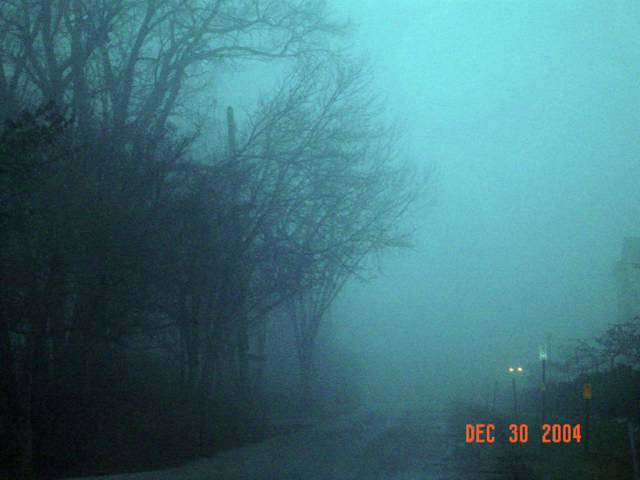
Milwaukee was particularly beautiful today - the lake brought in a stack of fog and mist, the weather was unseasonably warm, if quite moist and windy. Some images I captured...


States Of Fear, Bad Science And Perceptions Of Reality

The plethora of books one reads every year are not, for the most part, difficult to categorize as good, bad or ugly. The bad ones rarely get finished, and the time spent is considered wasted. The really good ones make one think, feel and wonder.

Michael Crichton's new book "State Of Fear" is an ambiguous book to review. It is in fact, a very good book hidden inside a bad one. The master of the application of bad science to thrillers excels in the creation of tense situations that are resolved more by intellect than any deus ex machina devices. The action shifts from place to place, yet retains a sense of unity of purpose and character.

The main thing wrong with the book is the character development. Most of the characters at one time or another merely quote long bodies of science, or pseudoscience, and the motivations of a few key characters are not clarified until it is too late to matter. Peter Evans, minutes away from death, professes his love for Sarah, yet keeps his distance from her for much of the book, seeming to fancy another character, Jennifer. Kenner's knowledge of many fields is set off against his inability to explain the conspiracy clearly to Peter. The deliberate attempt at rendering a political statement cum scientific polemic detracts from the action and distracts the reader.

Peter, an environmental lawyer is shaken out of his placid life by the disappearance of his primary client, a billionaire named George Morton with a certain resemblance to George Soros, in word and deed. He joins a couple of mysterious agents cum scientists in trying to thwart an eco-terrorism conspiracy to set off a series of climactic catastrophes around the world timed to coincide with a major environmental conference. Break-neck action and tense moments abound, although things are mostlyset right in the end, with a minor tsunami to boot. Along the way, the author paints almost the entire environment movement in as much of an unfriendly light as the movement itself characterizes big business. Many of the standard cliches about the environment are questioned, and it is made to appear as if the fears about global warming are unwarranted at best, and specious lies at worst.

It is not difficult to find crooks, bad scientists and unsavory characters in any movement, but that is no cause to doubt the ethics of the movement itself. This is similar to, say, considering all charities criminal because a few of them subvert public funds for 'uncharitable' purposes. As an author, Dr Crichton has the right to choose as crooked villains as his mind can dream up, and not introduce any other better representatives of the profession, but then he risks being classed a second-rate Sax Rohmer with stereotypical Fu Manchu-like characters rather than the masterful writer of good fiction he has shown himself to be.

The publishing company ran a game prior to publication wherein one had to visit a variety of websites scanning for codes and locations in Flash banners. Though this was quite cheesy at the time, reading the book now makes the clues more meaningful. Just for the record, here is the list of clues. This list alone, shows the breadth of the book, without giving away much of the plot.

1. AKAMAI
2. Paris Nord, France
3. Pavutu, Africa
4. Pahang, Malaysia
5. Shad Thames, London
6. Tokyo, Japan
7. Vancouver, BC
8. San Francisco, CA
9. Point Moody, CA
10. TERROR
11. Punta Arenas, Chile
12. Weddell Station, Antarctica
13. Beverly Hills, CA
14. ANGEL
15. Los Angeles, CA
16. Century City, CA
17. FLASH
18. City of Commerce, CA
19. Diablo Canyon, AZ
20. McKinley State Park, AZ
21. Arroraville, AZ
22. Oakland, CA
23. BLUE
24. Santa Monica, CA
25. RESOLUTION
26. Resolution Bay, Gareda
27. Pavutu, Gareda

One of the key aspects of this book, apart from the scientific spin, is the concept of netwar - most resonant with the current War on Terror. This deals with the fear of governments in having to fight an amorphous, loosely connected enemy who changes and shifts focus, and is well-informed & well-funded. In this case, the eco-terrorists employ highly advanced methods to attempt to control the weather, and are tracked by highly covert methods with great difficulty.

Possibly the most compelling character is a USC Professor named Hoffman who puts forth the proposition that the environmental crisis supplanted the spectre of global communism as a means of social control by the 'PLM' or politico-legal-media complex. Sounding like a David Icke-clone, he makes quite a bit of sense in trying to show that state control of society depends on having sources of fear to manipulate the populace. Not a new idea, and one that saw it's most sinister application in the fascist regimes of the twentieth century, and indeed in the historicity argument of Marxism. Hoffmann's best line comes when he talks about 'whole sectors of society' living 'the life of the mind', supplanting universities, who, according to him, are 'the most restrictive environments in modern society' and 'factories of fear for the PLM'. Thus he adduces 'the nation that these institutions are liberal is a joke. They are fascist to the core...'

In effect, Dr Crichton's thesis is that the eco-crisis is a meme gone wild, an idea whose appeal is like that of a fad, fed by legions of academia, politicians and the media. He expands on the theme, directly to the reader at the end of the book, with a few appendices, and the line, possibly tongue in cheek that 'Everybody has a agenda. Except me.'

The science citations in the book are all real, but similar, contrary citations can be found easily enough - such as this one in the NY Times on Arctic warming. This serves to support Dr Crichton's additional thesis that 'all reality is media reality'. An example of good analysis of the pros and cons of one of his examples - the ablation, or lack of it, of glaciers - is shown by this homework assignment from the University of Cincinnati on global warming and the related course. Dr Crichton spends a lot of time in the book warning against allowing bias to affect our perception of reality, as in 'believing' that greenhouse gases primarily cause global warming, while ignoring the effects of urbanization. He fails to exclude bias himself, however, in his reasoning.

The challenge of separating out an individual issue like the question of whether global warming is indeed occuring from the larger pantheon of environmental issues such as pollution and depleting resources is not easy, and possibly pointless. Any person who has seen the pollution clouds of the uber-cities would agree that these are important problems which cannot be dismissed as mere gimmickry by a sinister cabal of environmentalists, determined to preserve their sinecures.

In the end, perhaps it is good that this book is shelved under fiction, for that is where it belongs, despite all the scientific efforts of the author. A thrilling read, with provocative ideas that should induce the reader to do some research of his own into an important subject, more relevant today with the signing of the Kyoto protocol and the recent disasters in Asia.

3.5/5


Another Loss To The Wave

andamans

India's southernmost point, Indira Point was a 100 sq. km. island 51 km from "Point Zero" at Campbell Bay and 140 km from Sumatra. This island has also been known as Parsons Point and Pygmalion Point. It is a favorite nesting site for Olive Ridley turtles, leatherback turtles and other sea fauna. Well, no more. From the Times of India,
Sunday’s tsunami, which altered Asia’s map, nearly changed India’s map too. Indira Point — the country’s southernmost tip — has been washed away.
There is no trace of the half-a-dozen “international scientists” nor the 20-odd inhabitants of this 100 sqkm Indian Ocean island. Just 140 km from Sumatra and 51 km from “point zero” at Campbell Bay, India’s Final Operating Base (FOB) bore the full force of the tsunami...

Nicobar coast guard commander Milind Patil said, “Our vessel Bikaji Kama made it to within 31 km from zero point. They found only four male survivors. Two of them have lost their limbs and the others sustained fractures on the back.” All the four were airlifted to Port Blair. “A Coast Guard helicopter could make just one sortie to Indira Point. It reported the island was below the ocean,” said Patil.

The FOB — with a five-bed hospital, communication equipment, armoury and ship support equipment — is under water.

The Andamans are also of strategic importance - both for India and China, being a series of choke points for access to the Bay of Bengal, Singapore and Sumatra. The islands themselves have little defense against the forces of nature. Good information at Sanctuary Asia on the Islands. No wikipedia entry on Indira Point, though.

Also, somewhat unrelated, Lord Richard Attenborough, producer of the feature film Gandhi has lost three members of his immediate family, including his granddaughter in the tidal wave disaster in Phuket in Thailand, said his family sources.
Lord Attenborough’s family was holidaying in Phuket. His granddaughter Lucy was in the resort with her 17-year-old sister Alice, brother Sam, her mother Jane, father Michael and her mother-in-law Jane Holland, when the tragedy struck.

The Attenboroughs' granddaughter, 14-year-old Lucy, died at the scene. Another granddaughter, Alice, 17, is now being treated in hospital. Their elder daughter, Jane, is missing, as is her mother-in-law, Jane Holland.

Wednesday, December 29, 2004

Getflics: The Royal Scam

Here's a likely scam for you: Unlimited downloads of movies @ $1.99 per month. While the site might sound like a next-generation version of Netflix, down to the tag lines and visuals, deeper digging turns up some fishy details.

Firstly, movies still in theaters are available on the site, including National Treasure and Ocean's Twelve - last I heard, the MPAA hadn't announced any changes in the delayed DVD policy. Secondly, ripoffreport.com has at least one complaint from a disgruntled user,
On December 20 of 2004 I purchased online a membership to getflics. I used my Discover card to pay $23.88.

This membership was supposed to give me unlimited access to a movie database for one year. I signed up for a 7 day free trial that would rollover to the one year subscription automaticaly unless I cancelled within 7 days. I didn't get anything for my payment. Nothing at all.

The password and ID they assigned me does not work. I tried numerous times to no avail. They refused to reissue me another ID and password! (So right there I'm dead in the water. I can't get into anything without a password and ID)

After I paid the membership fee and after at least an hour of hacking I got to view the movie database. It's nearly all pornographic! I don't want porno.

I phoned them via an 888 number. Explained the situation. The woman told me that she wouldn't credit my discover card because I "signed up for a one year membership and it's started". (It didn't make much sense to me either) I asked her about the seven day free trial. She said "That's not what you clicked on". I told that I wanted my money back or I would complain loudly. She told me "complain all you want to. Your not getting a refund".


Long discussion at AnandTech

Excellent investigative work on this forum shows:

WHOIS:
Domain Name: GETFLICS.COM

Created on..............: Thu, Nov 20, 2003
Expires on..............: Sun, Nov 20, 2005
Record last updated on..: Thu, Feb 19, 2004

Administrative Contact:
b-unit consulting
christopher bridgewood
775 Park Avenue Suite 110 # 3
Huntington, ny 11743
US
Phone: 5167791818
Fax..: 6317558005
Email: webmaster@bunitconsulting.com

bunitconsulting.com is owned by 'chris bridgwood' (notice the spelling diff) of 33 apple lane, commack, NY
Corporate Headquarters: 31 E. 32nd Street, NY NY 10016 1.212.481.8484*362 (Across From Empire State Building) (LOL)

on October 22, 1999 'ATF Arrests Convicted Felons of Selling Guns and Drugs to Undercover Officers': "STEVEN and NICOLE PERAGINE, ages 33 and 27, of 33 Apple Lane, Comack, N.Y"


What is truly sad is that this gimmick/scam could kill the nascent pay-per-download business even before it proves itself as a viable medium for content distribution. I am a satisfied customer of both MovieLink and Netflix, and there is nothing better I would like to see than the two models merge.

Watchout!!

John Legend's "Get Lifted"

In November, I reviewed the first single from John Legend's new album, "Get Lifted". The entire album is out now (Dec 28 - already Amazon #37), and measures up admirably to the single, "Used To Love You".

The album has fourteen songs, with the iTunes verson featuring only nine - but what songs they are. Each one lingers like a glass of fine wine, and dwells on simple things, with gentle harmonies, easy beats and a smooth voice. One song, "Number One" features Kanye West, who has also written and produced many of the songs for this album. My favorite song, apart from "Used To Love You" is "Ordinary People", a light love song on piano, where John talks about taking it slow in a relationship because we are just ordinary people. Nothing complex, but meaningful. According to John, the song is, "real, a composite of experiences. It's about love, not as a fantasy or fairytale, but as it really goes down between two people."

"Refuge (When It's Cold Outside)" is a soulful ballad, while "Live It Up" has a faster beat. In short, John displays admirable range, well supported by good lyrics.

The album resonates with influences from Talib Kweli, Kanye West et al, and refreshes soul music, without destroying the essence of the style. His own experiences and exposure to music in Philadelphia and elsewhere permeate the album. Thematically, love and the need for the other to understand the self are the underlying themes on most of the songs, from the title track to the doo-wop "I Can Change". The artist's site is a nice one too, with a backing soundtrack, and a piano room with behind the scenes versions of the songs.

Worthy of repeated listening, and a portent of great things from this fine artist, "Get Lifted" is a good, well-produced album. John Legend will be on tour early next year, beginning with a show in Washington, DC.


Some Fine Books